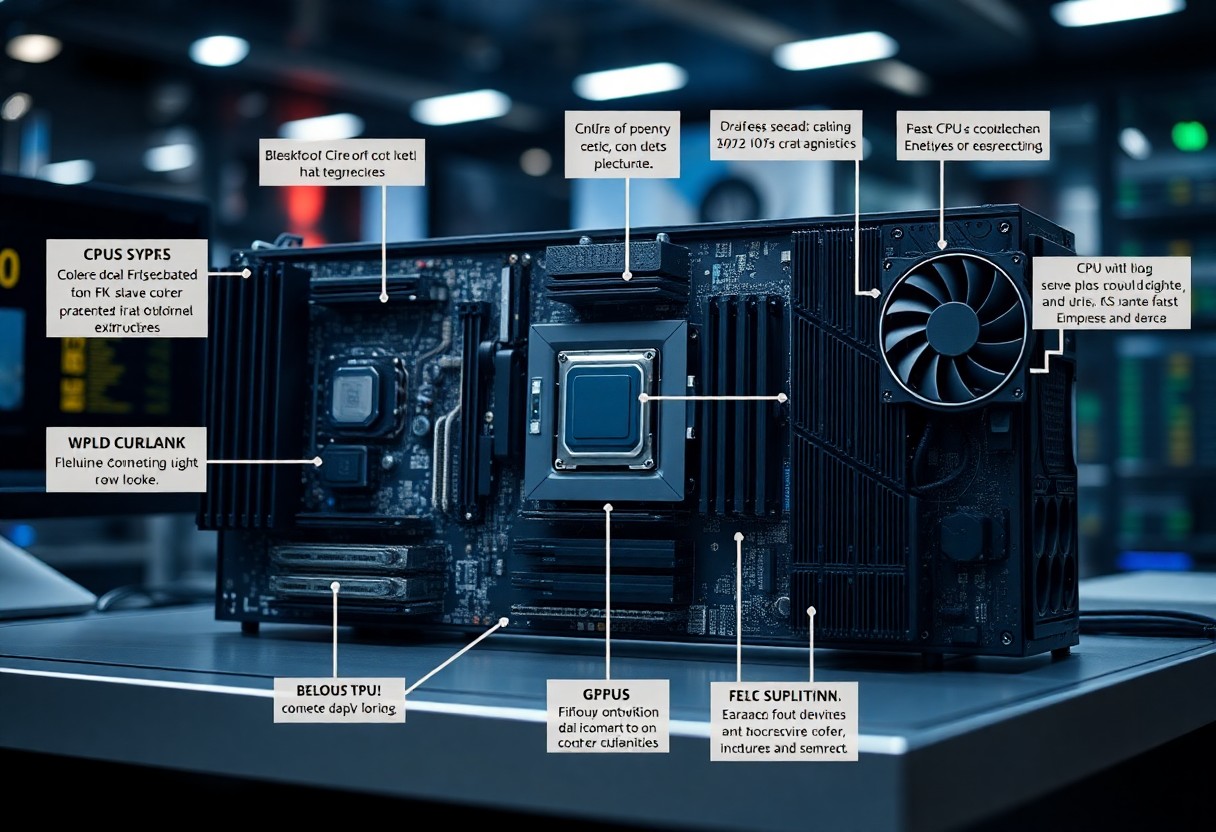
Processing units serve as the backbone of your computing devices, executing instructions and managing tasks efficiently. You will explore various types of processing units, including CPUs and GPUs, as well as their specific functions and contributions to modern technology. Understanding these components will enhance your knowledge of how your devices operate. For more details, refer to this article on Computer Processor (CPU): Working, Types, and Importance.
Key Takeaways:
- Processing units include CPUs, GPUs, and TPUs, each optimized for specific tasks within computing devices.
- They perform necessary functions such as executing instructions, managing data flow, and rendering graphics.
- The evolution of processing units has significantly enhanced the performance and efficiency of modern computing applications.
Understanding the Processing Unit
Definition and Purpose
The processing unit serves as the heart of your computing device, executing instructions and performing calculations necessary for executing tasks. It interprets and processes data from various sources, enabling applications to run efficiently and effectively. Through its operations, you experience smoother performance and enhanced multitasking capabilities, which are critical for both personal and professional tasks.
Historical Evolution
The evolution of the processing unit began with the invention of the vacuum tube in the 1940s, leading to the development of the first electronic computers. Subsequently, transistors emerged in the 1950s, drastically improving efficiency and size. The introduction of integrated circuits in the 1960s paved the way for modern microprocessors, which further revolutionized computing. Your device today benefits from decades of innovation, resulting in powerful processing units capable of executing billions of instructions per second.
In the early 1970s, Intel released the 4004, the first commercially available microprocessor, marking a significant milestone in computing. As technology advanced, further iterations like the Intel 8080 and Motorola 68000 series emerged, which laid the foundation for personal computers. The 1980s saw the rise of x86 architecture, dominating the market. By the 2000s, multi-core processors became the standard, allowing for simultaneous processing and efficiency improvements. These developments have culminated in the highly specialized processing units in use today, including GPUs dedicated to parallel processing tasks like graphics and AI computations, enhancing your overall computing experience.
Types of Processing Units
Processing units come in various forms, each designed for specific tasks within computing systems. Understanding these types enhances your grasp of their unique functions and applications in modern technology.
- Central Processing Unit (CPU)
- Graphics Processing Unit (GPU)
- Digital Signal Processor (DSP)
- Field-Programmable Gate Array (FPGA)
- Application-Specific Integrated Circuit (ASIC)
After exploring these processing units, you will appreciate how they contribute differently to computational tasks.
| Type | Description |
| CPU | General-purpose processor critical for overall system performance. |
| GPU | Specialized for rendering graphics and parallel processing. |
| DSP | Optimized for processing signals and real-time data manipulation. |
| FPGA | Reconfigurable hardware suitable for custom applications. |
| ASIC | Custom-designed chips for specific tasks, highly efficient. |
Central Processing Unit (CPU)
The CPU serves as the brain of your computer, executing instructions from programs and managing tasks across the system. It is responsible for the arithmetic and logical operations needed for software execution, maintaining efficiency and speed in computing operations.
Graphics Processing Unit (GPU)
The GPU is tailored for rendering images, processing complex visual data, and performing parallel processing tasks. This specialized unit significantly enhances performance in graphics-intensive applications, making it necessary for gaming, video editing, and machine learning workloads.
In modern computing, GPUs excel at handling vast amounts of data simultaneously, which is vital for tasks like training artificial intelligence models or rendering 3D graphics in real-time. The parallel structure allows rapid computation for multiple operations, unlike CPUs that excel in sequential processing. Popular GPU manufacturers, such as NVIDIA and AMD, continually innovate to enhance performance while reducing power consumption.
Digital Signal Processor (DSP)
The DSP is designed for high-performance signal processing, such as audio, video, and telecommunication applications. Its architecture optimizes the execution of algorithms needed for real-time data manipulation, making it key in devices like smartphones and audio equipment.
DSPs are ideal for tasks requiring fast mathematical computations and reductions in latency. They often operate on streams of data, enabling real-time processing for voice recognition or noise cancellation. By utilizing specialized instructions and architectures, DSPs achieve efficiency with minimal power, making them perfect for embedded systems and mobile devices.
Field-Programmable Gate Array (FPGA)
An FPGA is a versatile type of processing unit that you can reconfigure to meet specific requirements after manufacturing. This flexibility allows tailored solutions across various applications, from telecommunications to automotive systems.
FPGAs are particularly favored for their adaptability and rapid prototyping capabilities, enabling designers to modify hardware functionality without the need for new chips. They are utilized in environments where performance needs might change over time, allowing for updates and enhancements without complete system overhauls. Their parallel processing capabilities also lend themselves well to complex algorithm implementations, making them suitable for high-performance tasks in research and development settings.
Functions of Processing Units
Processing units serve multiple functions that are vital to the operation of modern computing devices. They execute commands, process data, manage tasks, and facilitate efficient parallel computing. Understanding these functions will enhance your grasp of how your device delivers performance and multitasking capabilities.
Data Processing
Your processing unit handles data by performing mathematical calculations, logical operations, and data transformations. This involves taking raw data, executing operations on it, and producing results that applications can use. For example, when you input a formula in a spreadsheet, it is processed by the unit to generate your desired output.
Task Scheduling and Management
Effective task scheduling ensures that your processing unit allocates system resources efficiently among competing tasks. The unit prioritizes jobs based on demand and processing power, allowing multiple applications to run simultaneously without significant lag or interruption.
Task scheduling is not merely about running applications; it involves intricate algorithms that determine the order and timing with which tasks get executed. This oversight allows tasks to share resources such as memory and processing time effectively, enhancing overall system performance. For instance, operating systems utilize advanced scheduling techniques like round-robin or priority-based scheduling to manage tasks dynamically, ensuring your applications respond promptly to your commands.
Parallel Processing
Your processing unit can execute multiple operations simultaneously through parallel processing. By dividing tasks into smaller, manageable sub-tasks, it significantly speeds up data processing and improves the efficiency of computations, especially for resource-intensive applications.
Parallel processing elevates performance by utilizing multiple cores or processors to work on separate pieces of a task concurrently. For example, in image processing, one core might handle color adjustments while another processes filtering effects, ultimately reducing processing time. This approach is crucial for applications in scientific computing and real-time data analysis, where fast computation is important to your work or gaming experience.
The Role of Processing Units in Modern Computing
The processing unit is at the core of modern computing, orchestrating various operations and ensuring seamless software functionality. It not only executes instructions but also influences device efficiency and user experience. The Central Processing Unit (CPU) is a prime example of this vital role, enabling you to multitask and run complex applications with speed. Whether in desktops, laptops, or smartphones, the processing unit is indispensable in translating your commands into actionable results.
Impact on Performance
Your device's performance heavily relies on the capabilities of its processing unit. A powerful CPU enables faster computations, allowing you to run demanding applications and process large datasets efficiently. Higher clock speeds and more cores translate to smoother multitasking, meaning you can work on various applications simultaneously without lag.
Integration with Other Components
The effectiveness of your processing unit largely derives from its integration with other hardware components. The collaboration between the CPU, memory, storage, and GPU determines the overall speed and performance of your system. Advanced architectures facilitate quicker data transfers between these components, significantly improving processing efficiency and user experience.
For optimal performance, a well-balanced system architecture is crucial. A high-performance CPU requires sufficient RAM to ensure smooth data access and faster retrieval. Likewise, a fast SSD (Solid State Drive) can dramatically reduce loading times, allowing the CPU to execute tasks without unnecessary delays. Well-designed chipsets also enhance data throughput and enable higher bandwidth communication, creating an efficient synergy between processing units and other components.
Future Trends and Innovations
Future trends in processing units are aimed at enhancing efficiency and performance, with a strong focus on energy consumption. AI and machine learning capabilities are increasingly integrated into CPUs, allowing for smarter resource allocation and faster processing of complex algorithms. Innovations in quantum computing and neuromorphic processing are also on the horizon, promising to revolutionize how data is processed.
As technology advances, the development of specialized processing units will become more prevalent. These could include application-specific integrated circuits (ASICs) tailored for specific tasks or architectures that can adapt dynamically to varying workloads. As we transition toward a more interconnected world, advancements in processing units will emphasize not only computational power but also energy efficiency, supporting sustainable growth in the tech landscape.
Comparison of Processing Unit Types
Different types of processing units offer varying capabilities and are suited for specific computing tasks. Understanding these differences helps in selecting the right unit for your needs.
- CPUs: Versatile, suitable for general computing.
- GPUs: Excel in parallel processing, ideal for graphics rendering.
- TPUs: Specialized for machine learning operations.
- FPGAs: Highly customizable for specific tasks.
- ASICs: Designed for specific applications with high efficiency.
This What is a CPU | CPU Types and Functions guide can provide further insights into these processing units.
| Type | Attributes |
|---|---|
| CPU | General-purpose computations. |
| GPU | Parallel processing for graphics. |
| TPU | Optimized for AI and ML tasks. |
| FPGA | Programmable for custom tasks. |
| ASIC | High efficiency for specific applications. |
Performance Characteristics
Each processing unit type brings unique performance characteristics. CPUs provide high single-threaded performance, while GPUs allow rapid execution of multiple parallel tasks, making them ideal for graphics and AI computations. TPUs further enhance performance in machine learning scenarios through specialized architectures designed for tensor operations.
Use Case Scenarios
Use cases vary significantly based on the processing unit. CPUs are best for general tasks like web browsing and word processing. GPUs are favored for gaming and graphic design, where parallel processing is key. TPUs shine in machine learning applications, enabling faster model training and inference.
For example, in gaming, CPUs handle game logic and physics, while GPUs render the complex visuals required for immersive experiences. Similarly, in data science, you might use CPUs for data manipulation but switch to TPUs or GPUs for training deep learning models because of their speed and efficiency. Understanding these scenarios allows you to leverage the right technology for your specific needs effectively.
Challenges in Processing Unit Development
As technology advances, engineers and designers face numerous challenges in developing efficient processing units. The relentless push for higher performance and faster processing speeds must balance with thermal management, miniaturization, and fabrication complexities. These factors complicate the integration of novel technologies while maintaining compatibility with existing systems. The race towards creating smaller, more powerful chips invariably leads to escalating production costs and extended timeframes for development, pressuring manufacturers to innovate continuously.
Technological Limitations
Technological limitations heavily impact processing unit development, primarily due to the physics governing semiconductor materials. As transistor sizes approach atomic scales, issues such as quantum tunneling and leakage currents arise, leading to reduced efficiency and reliability. The quest for new materials or architectures often reveals unforeseen challenges, necessitating re-evaluation of design principles to overcome these barriers.
Power Consumption and Efficiency
Managing power consumption while enhancing performance presents a unique challenge. Processing units generate significant heat during operation; excessive heat can lead to system failures or reduced efficiency. Your devices often incorporate various strategies, such as dynamic voltage scaling and clock gating, to optimize power usage without sacrificing performance.
Balancing power consumption against performance is critical in modern processing unit design. Advances in architectures, like ARM and x86, aim at achieving power efficiency without compromising computational speed. Moreover, technologies such as FinFET transistors reduce leakage currents and allow for faster switching times at lower voltages. This synergy between efficiency and performance is pivotal as devices become increasingly mobile, necessitating the design of processors that can deliver high outputs while extending battery life—a crucial factor for end-users who rely on portable computing.
To wrap up
Summing up, understanding the various types of processing units and their functions enhances your knowledge of modern computing devices. Whether you are using a CPU for general tasks or a GPU for specialized applications, you appreciate how these components work together to execute your commands efficiently. As technology evolves, your awareness of these roles will empower you to make informed choices in your computing experience.
FAQ
Q: What are the main types of processing units used in computing devices?
A: The main types of processing units include the Central Processing Unit (CPU), Graphics Processing Unit (GPU), Digital Signal Processor (DSP), and Field Programmable Gate Array (FPGA). Each type specializes in specific tasks; CPUs handle general-purpose processing, GPUs excel in parallel processing for graphics, DSPs focus on signal processing, and FPGAs can be customized for specific applications.
Q: What functions does a CPU perform in a computing device?
A: The CPU performs several key functions such as executing instructions from programs, managing data flow between hardware components, and coordinating operations of input/output devices. It processes arithmetic and logical operations and serves as the primary unit for executing a computing device's software.
Q: How does a GPU enhance the performance of modern devices?
A: A GPU enhances performance by allowing parallel processing, enabling it to handle multiple tasks simultaneously. This is particularly beneficial for rendering graphics, processing large data sets in scientific computing, and improving performance in applications like machine learning and gaming.
Q: What role does a DSP play in specific applications?
A: A DSP is designed for efficient manipulation of signals in real-time. It is commonly used in applications such as audio processing, image processing, communications, and control systems, providing optimized performance for operations requiring fast, efficient processing of data sequences.
Q: How do FPGAs differ from traditional processing units?
A: FPGAs differ from traditional processing units in that they are programmable hardware, allowing developers to configure them for specific tasks after manufacturing. This flexibility enables customization for particular applications, making FPGAs advantageous for specialized processing needs and rapid prototyping.


 Posts
Posts


0 Comments